Daily Junction.mobi portal
Entertainment · October 27, 2026 · The Conversation · 5 min
A new Netflix series has revived interest in the Stanford prison experiment. Zimbardo and Milgram’s flawed studies still leave a question unanswered.
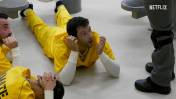
<div class="theconversation-article-body"> <figure> <img alt="'Prisoners' wearing yellow jumpsuits lie on the floor in the new Netflix series The New Stanford Prison Experiment." src="https://images.theconversation.com/files/767984/original/file-20261023-50-baga5q.png?ixlib=rb-4.1.1&rect=0%2C0%2C1280%2C720&q=45&auto=format&w=754&fit=clip" /> <figcaption>
<span class="attribution"><a class="source" href="https://www.youtube.com/watch?v=L1aOgRKwi5Q">Netflix</a></span> </figcaption> </figure>
<span><a href="https://theconversation.com/profiles/david-kaposi-1287227">David Kaposi</a>, <em><a href="https://theconversation.com/institutions/the-open-university-748">The Open University</a></em></span>
<p>Two of the most famous experiments in psychology, the Stanford prison experiment and Stanley Milgram’s obedience studies, have been called a <a href="https://gen.medium.com/the-lifespan-of-a-lie-d869212b1f62">sham</a>, a <a href="https://lareviewofbooks.org/article/psych-lies-and-audiotape-the-tarnished-legacy-of-the-milgram-shock-experiments/">lie</a> and a <a href="https://www.inc.com/bill-murphy-jr/a-new-report-says-stanfords-most-famous-psychology-experiment-is-a-fraud-a-sham-a-lie.html">fraud</a>.</p>
<p><a href="https://theconversation.com/topics/retraction-watch-124511">Retraction Watch</a>, a site that tracks withdrawn research papers, has <a href="https://retractionwatch.com/2025/03/10/guest-post-should-zimbardos-stanford-prison-experiment-be-retracted/">hosted an argument</a> for retracting the Stanford paper. Psychologists have even been told that <a href="https://www.bps.org.uk/psychologist/why-almost-everything-you-know-about-milgram-wrong">almost everything they thought they knew about Milgram is wrong</a>.</p>
<p>Yet interest has not faded. This month, Netflix released six episodes of <a href="https://www.netflix.com/tudum/articles/the-new-stanford-prison-experiment-season-1-release-date-news">The New Stanford Prison Experiment</a>, putting the 1971 study back in the spotlight. Why do these much-criticised experiments keep drawing us back?</p>
<p>Part of the answer is how strong the original findings sounded. They came from what is often called the <a href="https://bpspsychub.onlinelibrary.wiley.com/doi/10.1111/bjso.12896">golden age</a> of American social psychology, roughly the 1950s to the early 1970s. Researchers in this period ran dramatic experiments on how groups and authority shape what ordinary people do.</p>
<figure> <iframe width="440" height="260" src="https://www.youtube.com/embed/L1aOgRKwi5Q?wmode=transparent&start=0" frameborder="0" allowfullscreen=""></iframe> <figcaption><span class="caption">The New Stanford Prison Experiment, official trailer.</span></figcaption> </figure>
<p>In the 1950s, the psychologist Solomon Asch <a href="https://web.mit.edu/curhan/www/docs/Articles/15341_Readings/Influence_Compliance/Asch_1955_Opinions_and_social_pressure.pdf">asked students</a> to match the length of a line to one of three others. When a room of actors all gave the same wrong answer, many of the real participants went along with them – at least some of the time. </p>
<p>In the early 1960s at Yale University, Stanley Milgram <a href="https://psycnet.apa.org/record/1964-03472-001?doi=1">told volunteers</a> they were helping with a study of memory and learning. They were asked to give electric shocks – rising to a level labelled dangerous – to a man in another room whenever he got a question wrong. </p>
<p>The shocks were fake and the man was an actor, but the participants did not know that. In the experiment’s initial version, 65% of them went all the way to the top of the scale when a man in a lab coat told them to continue.</p>
<p>In the late 1960s, the psychologists John Darley and Bibb Latané <a href="https://pubmed.ncbi.nlm.nih.gov/5645600/">studied</a> why people so often fail to help in an emergency. In one experiment, volunteers heard over an intercom what sounded like another participant having a seizure. The more people they believed could also hear, the less likely each one was to go for help.</p>
<p>Philip Zimbardo, a Stanford University psychologist who later became president of the American Psychological Association, was the last of these big names. In August 1971, he turned the basement of Stanford’s psychology department into a mock prison. He <a href="https://www.apa.org/topics/forensics-law-public-safety/prison">randomly assigned 24 male students</a> to play guards or prisoners in what was meant to be a two-week study.</p>
<p>He had to stop it after just six days, however, because some of the guards had become overly cruel and some of the prisoners had broken down.</p>
<h2>The critics</h2>
<p>In a <a href="https://psycnet.apa.org/record/2019-45337-001">2019 analysis</a> of the Stanford archive, the French researcher Thibault Le Texier argued that Zimbardo’s team gave the guards instructions on how to behave, so they were not acting spontaneously. Some prisoners later said they had exaggerated their distress. The study also <a href="https://link.springer.com/book/10.1007/978-3-031-49292-1">began as a student project</a>.</p>
<p>Milgram’s work has also been attacked. <a href="https://bpspsychub.onlinelibrary.wiley.com/doi/abs/10.1348/014466610x492205">One analysis</a> argued that he manufactured obedience in the lab rather than discovered it. And psychologists, writing for The Conversation, have <a href="https://theconversation.com/revisiting-milgrams-shocking-obedience-experiments-24787">pointed out</a> that across all versions of his experiment, more people disobeyed than obeyed.</p>
<p>Some of this criticism, though, is not new, because the researchers disclosed the facts themselves. Zimbardo’s 2007 bestseller, <a href="https://psycnet.apa.org/record/2007-04177-000">The Lucifer Effect</a>, credits his students with the original idea. It also describes how he acted as the prison’s “superintendent” and briefed and coached the guards.</p>
<p>The same goes for Milgram. He published the results of many of the variations himself, and noted that obedience fell sharply in some of them. However, those were variations that bore little resemblance to the original experiment setup.</p>
<p>The harder test is the alternative explanation. <a href="https://theconversation.com/profiles/alex-haslam-16086">Alex Haslam</a> of the University of Queensland and <a href="https://theconversation.com/profiles/stephen-reicher-16130">Stephen Reicher</a> of the University of St Andrews, both social psychologists, have argued for years that obedience alone cannot explain what happened. In 2002, they ran the <a href="https://pubmed.ncbi.nlm.nih.gov/16573869/">BBC prison study</a>, a televised re-run of Zimbardo’s idea, in which guards did not spontaneously turn cruel. </p>
<p>They suggest that participants believed in the scientific cause and chose to carry on – an idea they call <a href="https://journals.plos.org/plosbiology/article?id=10.1371/journal.pbio.1001426">“engaged followership”</a>. Their explanation has <a href="https://compass.onlinelibrary.wiley.com/doi/full/10.1111/spc3.12667">numerous critics</a>, however, who say they <a href="https://yalebooks.co.uk/book/9780300280869/the-experiment-requires-that-you-continue/">overlook evidence</a> from what was said and done during Milgram’s and Zimbardo’s original sessions. </p>
<p>Flawed though their experiments may have been by today’s ethical and methodological standards, Zimbardo and Milgram did chance upon something grave and important in human nature. They confronted their participants with a clear moral dilemma: will you choose evil, or will you choose good? And they witnessed ordinary person after ordinary person freely – albeit agonisingly – choosing evil.</p>
<p>That profound and deeply disturbing message is why people keep coming back to these decades-old studies. </p>
<p>Nothing that Zimbardo, Milgram, their most committed supporters or their fiercest critics have said comes close to fully explaining why ordinary people in their labs tended to choose evil when they could, with no consequence, choose good. </p>
<p>Of course, many of the pressures that made that fateful choice difficult are now known. But no amount of pressure accounts for the Stanford guards choosing to brutalise their fellows, or Milgram’s participants choosing to give yet another electric shock, when they could have freely chosen otherwise.</p>
<p>Zimbardo, Milgram and the other studies reveal something monstrous about ordinary human beings – about us all – while remaining elusive, enigmatic, almost mysterious. Until we understand why, as Milgram’s experimenter <a href="https://theconversation.com/please-continue-did-this-simple-two-word-phrase-lead-normal-people-to-torture-strangers-171179">told hesitant participants</a>: “The experiment requires that you continue.”<!-- Below is The Conversation's page counter tag. Please DO NOT REMOVE. --><img src="https://counter.theconversation.com/content/294814/count.gif?distributor=republish-lightbox-basic" alt="The Conversation" width="1" height="1" style="border: none !important; box-shadow: none !important; margin: 0 !important; max-height: 1px !important; max-width: 1px !important; min-height: 1px !important; min-width: 1px !important; opacity: 0 !important; outline: none !important; padding: 0 !important" referrerpolicy="no-referrer-when-downgrade" /><!-- End of code. If you don't see any code above, please get new code from the Advanced tab after you click the republish button. The page counter does not collect any personal data. More info: https://theconversation.com/republishing-guidelines --></p>
<p><span><a href="https://theconversation.com/profiles/david-kaposi-1287227">David Kaposi</a>, Psychotherapist and Senior Lecturer in Psychology, <em><a href="https://theconversation.com/institutions/the-open-university-748">The Open University</a></em></span></p>
<p>This article is republished from <a href="https://theconversation.com">The Conversation</a> under a Creative Commons license. Read the <a href="https://theconversation.com/stanford-prison-experiment-why-do-controversial-psychology-studies-still-have-such-a-hold-on-us-294814">original article</a>.</p> </div>