Daily Junction.mobi portal
Environment · November 4, 2026 · The Conversation · 5 min
A recent UN biodiversity summit showed little progress has been made.
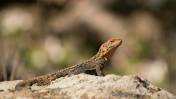
<div class="theconversation-article-body"> <figure> <img alt="Lizard on rock" src="https://images.theconversation.com/files/769775/original/file-20261103-64-g51mi6.jpg?ixlib=rb-4.1.1&rect=0%2C263%2C5051%2C2841&q=45&auto=format&w=754&fit=clip" /> <figcaption> A lizard soaks up the sun in Armenia’s Zangezur Mountains. <span class="attribution"><span class="source">bieszczady_wildlife / shutterstock</span></span> </figcaption> </figure>
<span><a href="https://theconversation.com/profiles/gabriella-santini-1543298">Gabriella Santini</a>, <em><a href="https://theconversation.com/institutions/ucl-1885">UCL</a></em>; <a href="https://theconversation.com/profiles/emily-woodhouse-1214392">Emily Woodhouse</a>, <em><a href="https://theconversation.com/institutions/ucl-1885">UCL</a></em>, and <a href="https://theconversation.com/profiles/simon-chin-yee-1394887">Simon Chin-Yee</a>, <em><a href="https://theconversation.com/institutions/ucl-1885">UCL</a></em></span>
<p>The UN’s main biodiversity summit, held every two years, wrapped up in Yerevan, Armenia, on October 31.</p>
<p>Biodiversity summits don’t attract the same fanfare as <a href="https://theconversation.com/topics/cop31-129714">their climate change equivalents</a>, yet loss of nature threatens food systems, water security, health, livelihoods and cultural traditions. Forests, soils, wetlands and oceans absorb around half the carbon dioxide humans emit, while climate change is itself one of the main drivers of biodiversity loss.</p>
<p>This summit, technically the 17th <a href="https://www.cbd.int/cop">Convention on Biological Diversity (CBD) conference</a>, or Cop17, was meant to take stock of progress and accelerate action on protecting biodiversity. Back in 2022, the same conference launched <a href="https://www.cbd.int/gbf">an ambitious framework</a> to reverse biodiversity loss by 2030, a goal that will require closing an US$700 billion (£520 billion) per year finance gap. </p>
<p>Targets include protecting 30% of land and sea, restoring degraded ecosystems, and halting the extinction of threatened species. Yerevan was the halfway point, and the first time countries formally reviewed how they were doing. </p>
<p>So, how did they do?</p>
<p>The first global review of the framework, <a href="https://www.cbd.int/globalreview/report2026">State of Biodiversity Action</a>, showed how little progress has been made. Almost 90% of countries have set national targets, but fewer than half are on track. The targets lagging furthest behind – covering business impacts, unsustainable consumption, harmful subsidies and finance – are the ones that need action beyond environment ministries and conservation programmes. </p>
<h2>Who pays?</h2>
<p>It comes down to money: who should pay for biodiversity protection? The framework calls for US$200 billion a year from all sources by 2030, including US$30 billion per year through international finance.</p>
<figure class="align-center zoomable"> <a aria-label="Zoomable image" href="https://images.theconversation.com/files/769779/original/file-20261103-64-ufeujy.jpg?ixlib=rb-4.1.1&q=45&auto=format&w=1000&fit=clip"><img alt="Cop17 sign with cliff and tall buildings in background" src="https://images.theconversation.com/files/769779/original/file-20261103-64-ufeujy.jpg?ixlib=rb-4.1.1&q=45&auto=format&w=754&fit=clip" srcset="https://images.theconversation.com/files/769779/original/file-20261103-64-ufeujy.jpg?ixlib=rb-4.1.1&q=45&auto=format&w=600&h=450&fit=crop&dpr=1 600w, https://images.theconversation.com/files/769779/original/file-20261103-64-ufeujy.jpg?ixlib=rb-4.1.1&q=30&auto=format&w=600&h=450&fit=crop&dpr=2 1200w, https://images.theconversation.com/files/769779/original/file-20261103-64-ufeujy.jpg?ixlib=rb-4.1.1&q=15&auto=format&w=600&h=450&fit=crop&dpr=3 1800w, https://images.theconversation.com/files/769779/original/file-20261103-64-ufeujy.jpg?ixlib=rb-4.1.1&q=45&auto=format&w=754&h=566&fit=crop&dpr=1 754w, https://images.theconversation.com/files/769779/original/file-20261103-64-ufeujy.jpg?ixlib=rb-4.1.1&q=30&auto=format&w=754&h=566&fit=crop&dpr=2 1508w, https://images.theconversation.com/files/769779/original/file-20261103-64-ufeujy.jpg?ixlib=rb-4.1.1&q=15&auto=format&w=754&h=566&fit=crop&dpr=3 2262w" sizes="(min-width: 1466px) 754px, (max-width: 599px) 100vw, (min-width: 600px) 600px, 237px"></a> <figcaption> <span class="caption">The latest UN biodiversity summit was held in Yerevan, the capital of Armenia.</span> <span class="attribution"><span class="source">Gabriella Santini</span></span> </figcaption> </figure>
<p>Two debates stood out. The first concerned who should manage the funds. Lower-income countries have argued for a new funding mechanism under the CBD’s control. Many high-income countries prefer the current Global Environment Facility, which critics say is bureaucratic and hard for local communities to access. Decisions on a new financial mechanism have been pushed to the next summit, Cop18, in Ecuador in 2028. </p>
<p>The second debate was about extending the list of countries expected to provide finance to developing countries. Emerging economies such as Saudi Arabia and Qatar resisted, as it would shift their contributions from voluntary to obligatory. In the end, it was agreed that countries that now want to contribute as donors can “signal interest” before Cop18. </p>
<p>The summit presidency announced that more than US$1.8 billion had been pledged from governments, philanthropic organisations and investors. That is welcome, but negligible compared with what is needed. Recent cuts to development aid have made the shortfall even harder to address. </p>
<p>The negotiations looked at alternative ways of valuing nature, such as <a href="https://www.ons.gov.uk/economy/environmentalaccounts/methodologies/naturalcapital">natural capital accounting</a> or treating nature as infrastructure. “Biodiversity is not just for tree-huggers,” said the CBD’s executive secretary Astrid Schomaker at a workshop in Yerevan, suggesting it should <a href="https://www.ft.com/content/d8a41c9e-7837-4edc-93a0-3896ab19d61a?syn-25a6b1a6=1">matter to business</a>.</p>
<p>Cutting or redirecting US$500 billion a year in harmful subsidies would help fund all this. But though this is the framework’s <a href="https://www.cbd.int/gbf/targets/18">target 18</a>, little progress has been made.</p>
<h2>Who benefits from genetic data?</h2>
<p>So-called digital sequence information, or DSI, was another subject of contention. This is genetic data gathered from plants, animals and microbes, stored in online databases and used by companies to develop medicines, crops and cosmetics. However, the countries and communities where these organisms come from have rarely been paid for their use. </p>
<p>The 2024 biodiversity summit in Colombia created the Cali Fund to change this. Large companies using DSI are expected to pay 1% of their profits or 0.1% of their revenue to this fund. At least half of the money is meant to go to Indigenous peoples and local communities. </p>
<p>The fund was expected to raise at least US$1 billion a year. By the end of this year’s summit, just five companies had committed a total of <a href="https://www.carbonbrief.org/cop17-key-outcomes-agreed-at-the-un-biodiversity-conference-in-yerevan">just US$10,565</a>. </p>
<p>Part of the problem is that contributions are voluntary. Negotiators debated who counts as a user of DSI, whether only large companies should pay, and how to avoid companies being charged twice under national and international schemes. After fraught discussions and delays, many of the key decisions were postponed to the next summit in 2028. </p>
<h2>The role of Indigenous people</h2>
<p>Indigenous peoples and local communities manage or hold rights over a large share of the world’s remaining biodiverse land. In 2024, parties created a permanent body to strengthen their role. </p>
<figure class="align-center zoomable"> <a aria-label="Zoomable image" href="https://images.theconversation.com/files/769780/original/file-20261103-64-wldps3.jpg?ixlib=rb-4.1.1&q=45&auto=format&w=1000&fit=clip"><img alt="People presenting information on Indigenous people" src="https://images.theconversation.com/files/769780/original/file-20261103-64-wldps3.jpg?ixlib=rb-4.1.1&q=45&auto=format&w=754&fit=clip" srcset="https://images.theconversation.com/files/769780/original/file-20261103-64-wldps3.jpg?ixlib=rb-4.1.1&q=45&auto=format&w=600&h=450&fit=crop&dpr=1 600w, https://images.theconversation.com/files/769780/original/file-20261103-64-wldps3.jpg?ixlib=rb-4.1.1&q=30&auto=format&w=600&h=450&fit=crop&dpr=2 1200w, https://images.theconversation.com/files/769780/original/file-20261103-64-wldps3.jpg?ixlib=rb-4.1.1&q=15&auto=format&w=600&h=450&fit=crop&dpr=3 1800w, https://images.theconversation.com/files/769780/original/file-20261103-64-wldps3.jpg?ixlib=rb-4.1.1&q=45&auto=format&w=754&h=566&fit=crop&dpr=1 754w, https://images.theconversation.com/files/769780/original/file-20261103-64-wldps3.jpg?ixlib=rb-4.1.1&q=30&auto=format&w=754&h=566&fit=crop&dpr=2 1508w, https://images.theconversation.com/files/769780/original/file-20261103-64-wldps3.jpg?ixlib=rb-4.1.1&q=15&auto=format&w=754&h=566&fit=crop&dpr=3 2262w" sizes="(min-width: 1466px) 754px, (max-width: 599px) 100vw, (min-width: 600px) 600px, 237px"></a> <figcaption> <span class="caption">Indigenous campaigners at the summit in Yerevan.</span> <span class="attribution"><span class="source">Gabriella Santini</span></span> </figcaption> </figure>